



Many business owners assume cybercriminals only target large enterprises.
After all, why would attackers go after a small or mid-sized business?
But the reality is very different.
Small businesses are one of the most common—and most successful—targets for cyberattacks.
The Misconception: “We’re Too Small to Be a Target”
It’s a common belief that smaller organizations fly under the radar. Without massive data centers or global operations, it can feel like there’s nothing worth attacking.
But cybercriminals don’t think that way. They aren’t just looking for size—they’re looking for opportunity.
And in many cases, small businesses present exactly that.
Why Small Businesses Are Attractive Targets
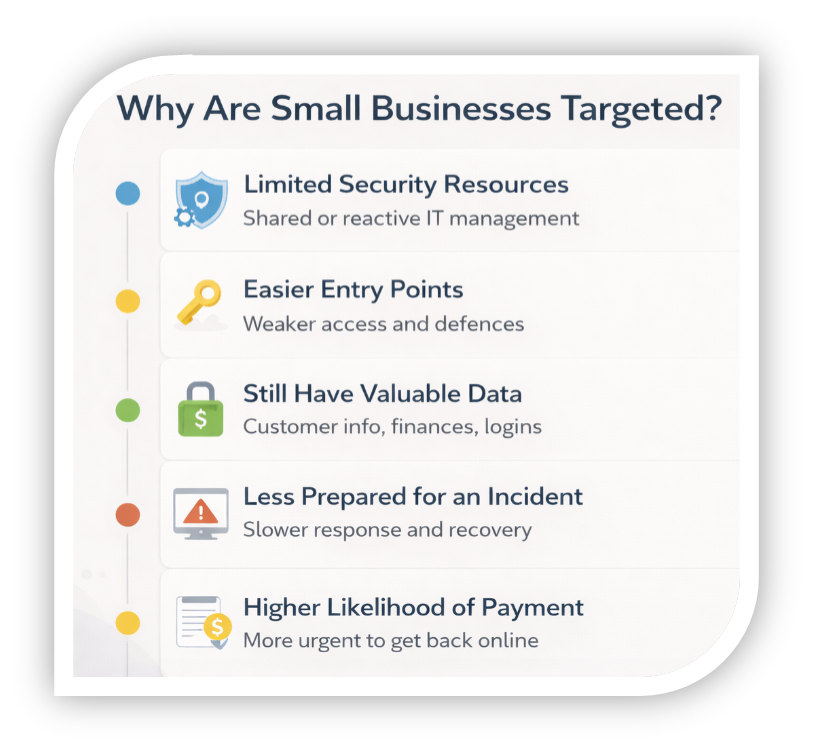
1. Limited Security Resources
Most small businesses don’t have a dedicated cybersecurity team. IT responsibilities are often shared across internal staff or handled reactively.
This creates gaps in protection, monitoring, and response - making it easier for attackers to gain access and go unnoticed.
2. Easier Entry Points
Cybercriminals typically look for the simplest path in. Small businesses often have weaker access controls, inconsistent updates, and fewer security layers.
These gaps don’t need to be large—just enough for an attacker to get in.
3. Valuable Data Still Exists
Even without enterprise-scale systems, small businesses store valuable information:
- Customer and client data
- Financial records
- Login credentials
- Vendor and partner access
For an attacker, this data is often more than enough to monetize or exploit.
4. Less Prepared for an Incident
Many small businesses don’t have a formal incident response plan. When something does go wrong, it takes longer to detect, contain, and recover.
That delay increases the overall impact—both financially and operationally.
5. High Likelihood of Payment
Cybercriminals understand that small businesses are more likely to pay to resolve an issue quickly. Whether it’s ransomware or access disruption, downtime can have an immediate effect on operations.
This makes small businesses an attractive target from a financial standpoint.
The Reality: Cyberattacks Are a Business Risk
Cybersecurity isn’t just a technical issue—it’s a business risk.
A successful attack can lead to:
- Operational downtime
- Financial loss
- Data exposure
- Reputational damage
For many businesses, the impact isn’t just temporary, it can affect long-term growth and stability.
🔗 Related Resource
To better understand how to evaluate your current security posture, read:
👉Cybersecurity for Small Businesses: The Complete Guide
What This Means for Your Business
The takeaway isn’t that your business is “at risk”—it’s that your business is part of the target landscape.
Cybercriminals are not selecting targets manually. They are using automated tools to scan for vulnerabilities across thousands of businesses at once.
If a gap exists, it will eventually be found.
Common Signs Your Business May Be Exposed
While many risks are not immediately visible, there are common indicators that a business may be more vulnerable than expected:
- Inconsistent or delayed system updates
- Limited visibility into user access and activity
- No centralized monitoring or alerting
- Unclear or undocumented security processes
These gaps don’t always cause immediate problems—but they increase long-term risk.
Awareness Is the First Step
Most businesses don’t intentionally ignore cybersecurity. In many cases, they simply don’t have a clear picture of where they stand.
Understanding your current environment, what’s protected, what’s not, and where gaps exist—is the foundation for making better decisions.
What Comes Next
Once awareness is established, the next step is evaluating how your current approach is impacting your business.
👉 In our next article, we break down:
The Hidden Costs of DIY IT Support (And Why It’s More Expensive Than You Think)
This helps connect the dots between security, operations, and overall business performance.
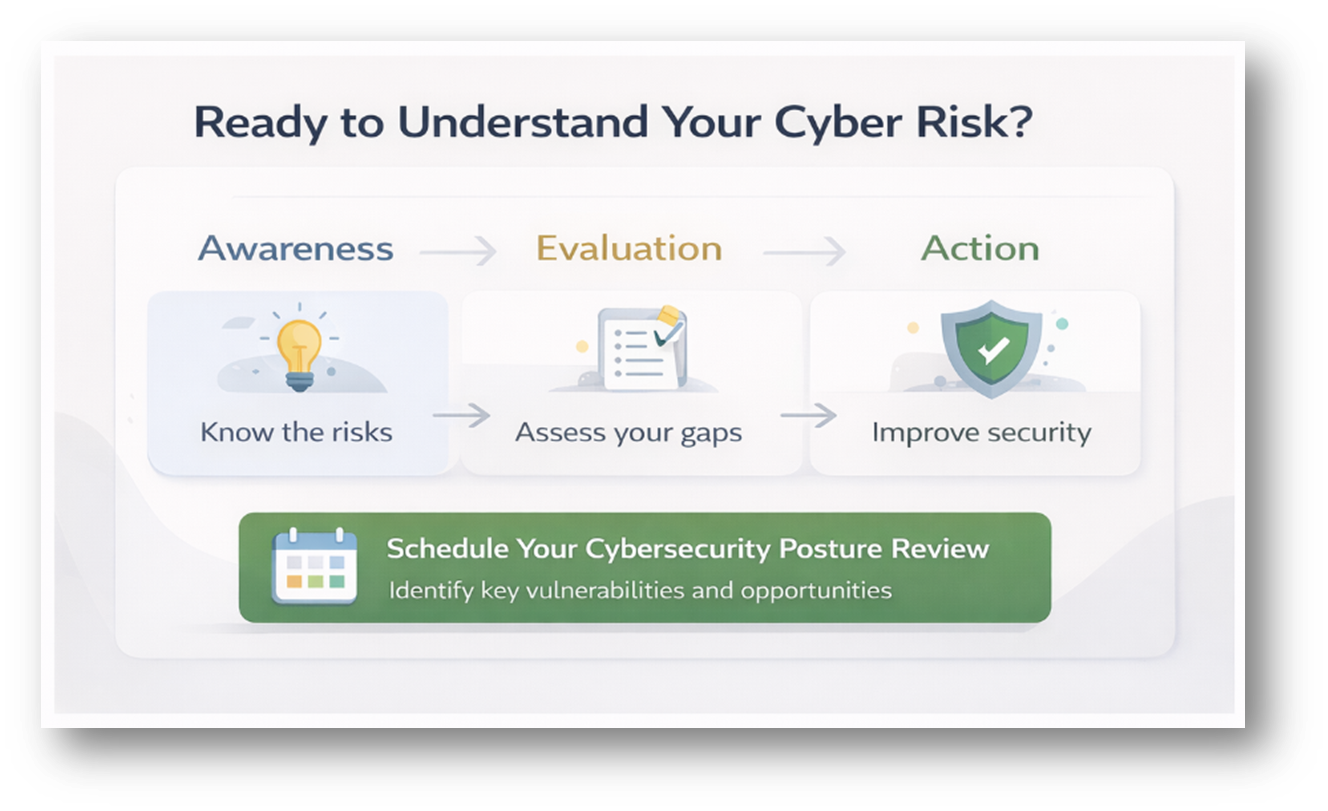
Ready to Understand Your Risk?
If you’re unsure how your business compares—or where gaps may exist—the best next step is a structured review.
Start with our complete guide:
👉 Cybersecurity for Small Businesses: The Complete Guide
Then take the next step:
👉 Schedule Your Cybersecurity Posture Review
No obligation. We’ll help you understand your current risk and identify opportunities to improve.
❓ FAQ: Why Small Businesses Are Targeted by Cybercriminals
Are small businesses really targeted by cybercriminals?
Yes. Small businesses are frequently targeted because they often have fewer security controls in place.
Why do attackers choose small businesses?
They are typically easier to access, less monitored, and more likely to pay to resolve disruptions quickly.
What kind of data do small businesses have that attackers want?
Customer data, financial information, login credentials, and vendor access are all valuable to attackers.
How can a small business reduce its risk?
The first step is understanding current vulnerabilities through a structured assessment, followed by implementing appropriate security controls.
Do cyberattacks only happen to certain industries?
No. Cyberattacks affect businesses across all industries, including healthcare, legal, financial services, and professional services.

.png)