


Cybersecurity leadership has become a priority for many small and mid-sized businesses. Between cyber insurance requirements, client security questionnaires, and growing compliance expectations, companies are realizing that cybersecurity is no longer just an IT responsibility — it’s a business risk that requires executive oversight.
But hiring a full-time Chief Information Security Officer(CISO) is often unrealistic for SMBs. Salaries alone frequently exceed $250,000 per year.
That’s why more organizations are turning to a Virtual CISO (vCISO).
A vCISO provides strategic cybersecurity leadership on a part-time or fractional basis, helping businesses build and oversee their security program without the cost of a full-time executive.
In this article, we’ll explain Virtual CISO cost in 2026, typical pricing models, and when SMBs should consider adding cybersecurity leadership.
Virtual CISO Cost in 2026: Quick Overview
For businesses evaluating cybersecurity leadership, a VirtualCISO (vCISO) provides executive-level security strategy without the cost of hiring a full-time security executive.
Typical Virtual CISO cost in 2026 ranges from
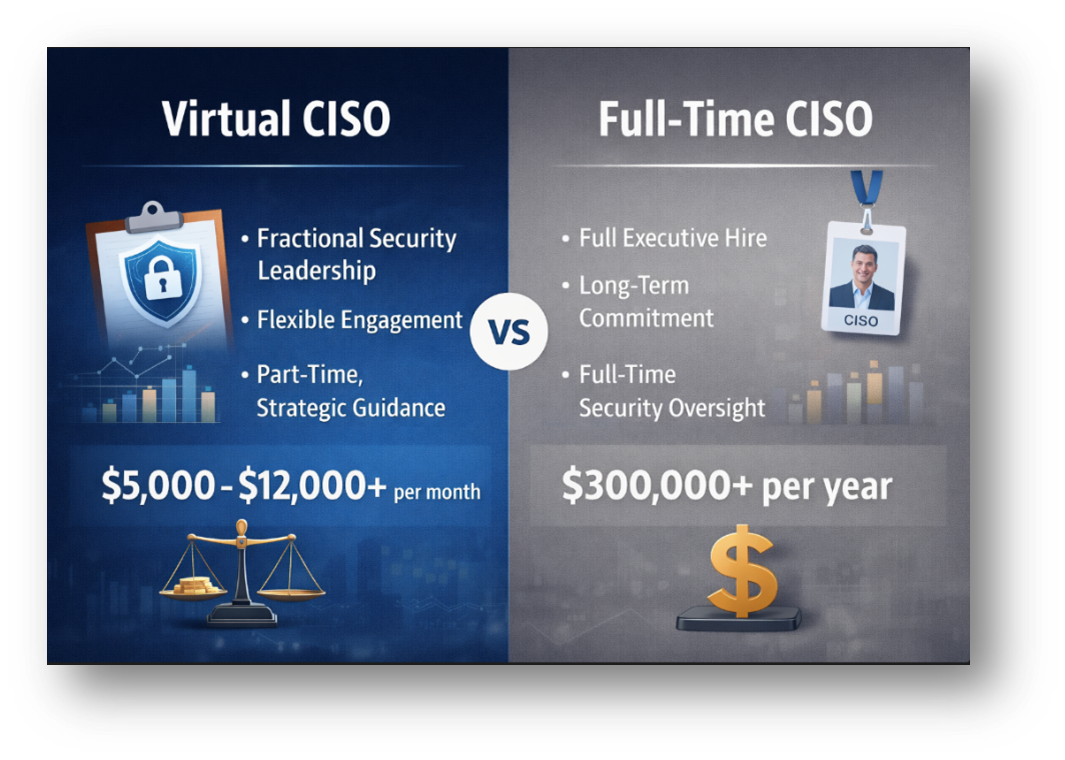
- $5,000 – $12,000 per month for most small and mid-sized businesses
- $200 – $400 per hour for consulting engagements
- $5,000 – $50,000+ for project-based security initiatives
In comparison, hiring a full-time Chief Information Security Officer (CISO) can cost $300,000 – $500,000 per year when salary, benefits, and bonuses are included.
For many SMBs, a Virtual CISO provides the strategic security leadership needed to manage cybersecurity risk, compliance, and governance at a fraction of the cost.
If you’re evaluating cybersecurity leadership as part of a broader security strategy, it’s important to understand how all the pieces fit together. Our Cybersecurity for Small Businesses: The Complete Guide breaks down the key risks, controls, and strategies every business should have in place.
👉https://www.icgi.com/blog/cybersecurity-for-small-businesses-the-complete-guide
What Is a Virtual CISO (vCISO)?
A Virtual Chief Information Security Officer (vCISO) is an outsourced cybersecurity executive who provides strategic security guidance for an organization.
Rather than hiring a full-time executive, businesses engage a vCISO to oversee cybersecurity governance and risk management while internal IT teams or managed service providers handle day-to-day technology operations.
A vCISO typically helps organizations with:
- Security strategy and roadmap development
- Cyber risk management and executive reporting
- Compliance oversight (HIPAA, SOC 2, PCI DSS, ISO frameworks)
- Security policy creation and governance
- Incident response planning and tabletop exercises
- Vendor and third-party security risk management
In simple terms, a vCISO focuses on security leadership and governance, ensuring that cybersecurity aligns with business objectives and risk tolerance.
How Much Does a Virtual CISO Cost in 2026?
The Virtual CISO cost in 2026 varies depending on company size, regulatory requirements, and the level of involvement required.
However, most organizations fall within several common pricing models.
Monthly vCISO Retainer
The most common model is a monthly advisory engagement.
Typical pricing ranges:
$5,000 – $12,000 per month
Some smaller organizations may pay closer to $2,000–$4,000 monthly, while companies in highly regulated industries may exceed $15,000 per month depending on complexity.
This model provides ongoing access to security leadership while maintaining predictable budgeting.
Hourly vCISO Consulting
Some organizations engage a vCISO for specific advisory projects.
Typical hourly rates:
$200 – $400 per hour
This approach is often used for
- Security policy development
- Risk assessment
- Security program reviews
- Compliance readiness guidance
Project-Based vCISO Engagements
Organizations sometimes engage vCISO services for defined initiatives.
Typical project pricing:
$5,000 – $50,000+ depending on scope
Common project engagements include:
- Cybersecurity maturity assessments
- Incident response plan development
- SOC 2 readiness programs
- Security governance framework implementation
Comparing vCISO Cost vs Hiring a Full-Time CISO
Hiring a full-time CISO is a major investment and typically makes sense only for large enterprises.
Typical compensation includes:
- Salary: $200,000 – $350,000+
- Executive bonuses and incentives
- Benefits and recruiting costs
When these factors are included, the total annual cost of aCISO can exceed:
$300,000 – $500,000 per year
For many SMBs, a Virtual CISO provides the strategic leadership they need at a fraction of the cost, making it an attractive alternative.
What Factors Influence Virtual CISO Cost?
Several variables determine how much a vCISO engagement will cost.
Company Size and Technology Complexity
Organizations with larger user bases, multiple locations, or extensive cloud environments typically require more oversight.
Factors include:
- Number of employees
- Number of locations
- Cloud infrastructure complexity
- SaaS platforms and vendor ecosystem
Building a Complete Cybersecurity Strategy
While understanding Virtual CISO cost is important, it’s only one part of a broader cybersecurity strategy.
Effective cybersecurity requires a layered approach that includes:
- identity and access controls
- endpoint protection
- email security
- backup and disaster recovery
- ongoing monitoring and response
If you’re looking for a full breakdown of how these components work together, review our Cybersecurity for Small Businesses: The Complete Guide, which outlines the essential security framework every SMB should follow.
👉 Read the full guide here: https://www.icgi.com/blog/cybersecurity-for-small-businesses-the-complete-guide
Compliance and Regulatory Requirements
Organizations operating in regulated industries often require deeper involvement from cybersecurity leadership.
Examples include:
- Healthcare organizations subject to HIPAA
- Financial services companies
- SaaS organizations pursuing SOC 2
- Government contractors working toward CMMC
Compliance requirements often increase the scope of vCISOservices.
Existing Cybersecurity Maturity
Companies with limited cybersecurity structure may require foundational work such as:
- Risk assessments
- Security roadmap development
- Policy creation
- Governance framework implementation
Organizations with more mature programs typically requireless ongoing effort.
Engagement Frequency
Some organizations require regular involvement from a vCISO, including:
- Quarterly risk reporting
- Executive leadership briefings
- Vendor risk assessments
- Ongoing compliance oversight
Others require only periodic advisory guidance.
When Should an SMB Consider a Virtual CISO?
Many small and mid-sized businesses reach a point where cybersecurity decisions require executive oversight.
A vCISO becomes valuable when organizations face situations such as: Increasing Compliance Requirements
Frameworks like HIPAA, SOC 2, PCI DSS, and ISO standards require documented security governance.
Client Security Questionnaires
Many organizations now require vendors to complete detailed cybersecurity assessments during procurement.
A vCISO helps organizations respond confidently and demonstrate security maturity.
Cyber Insurance Requirements
Insurance providers increasingly request evidence of:
- Security risk assessments
- Incident response plans
- Security governance policies
A vCISO helps businesses maintain these requirements.
Growing Cybersecurity Complexity
As companies adopt cloud platforms, SaaS tools, and remote work environments, security oversight becomes more complex.
Cybersecurity leadership ensures these systems are managed with risk awareness.
How ICG Helps Businesses Strengthen Cybersecurity Governance
At ICG, cybersecurity is about more than just deploying tools.
It’s about building a structured security program aligned with business risk, compliance requirements, and operational goals.
We help organizations strengthen their cybersecurity posture through:
- Managed IT Services
- Advanced cybersecurity monitoring and protection
- Security risk assessments
- Compliance readiness and governance guidance
For many organizations, the goal is simple:
Translate cybersecurity risk into clear, actionable business decisions.
Technology alone doesn’t create a cybersecurity program.
Leadership, governance, and accountability do.
The Bottom Line on Virtual CISO Cost
Cybersecurity leadership used to be reserved for large enterprises.
Today, Virtual CISO services allow SMBs to access experienced security leadership without the cost of hiring a full-time executive.
For organizations facing increasing security expectations—from compliance requirements to cyber insurance reviews—a vCISO can provide the strategic oversight needed to reduce risk and strengthen cybersecurity programs.
Need Help Evaluating Your Cybersecurity Posture?
ICG works with organizations to identify security gaps and build practical cybersecurity programs aligned with business risk.
Request a Cybersecurity Posture Review from ICG.
Related Questions Businesses Ask About Virtual CISOs
What is the difference between a vCISO and a fractional CISO?
The terms Virtual CISO and fractional CISO are often used interchangeably. Both refer to cybersecurity executives who provide strategic security leadership on a part-time basis rather than working as a full-time employee.
Do small businesses really need a CISO?
Most small businesses do not need a full-time CISO. However, as cybersecurity risks grow and compliance requirements increase, many SMBs benefit from fractional cybersecurity leadership to guide security strategy and risk management.
Can a managed service provider offer vCISO services?
Some managed service providers partner with cybersecurity advisory firms to deliver vCISO-style governance and security leadership alongside managed IT and cybersecurity operations.
Frequently Asked Questions About Virtual CISO Cost
What is the average Virtual CISO cost in 2026?
Most organizations pay between $5,000 and $12,000 per month for vCISO services depending on company size, compliance requirements, and engagement level.
Is a Virtual CISO cheaper than hiring a full-time CISO?
Yes. A full-time CISO often costs $300,000 or more annually, while a vCISO provides executive cybersecurity leadership at a fraction of that cost.
How many hours per month does a vCISO typically work?
Most vCISO engagements range between 10 and 40 hours per month, depending on the organization’s security needs.
What industries commonly use vCISO services?
vCISO services are commonly used in industries such as healthcare, financial services, legal firms, SaaS companies, and professional services organizations.
Can a managed IT provider support vCISO services?
Many managed IT providers partner with cybersecurity specialists or advisory teams to deliver vCISO-style governance and security leadership alongside managed IT and cybersecurity services.
How does a Virtual CISO fit into a complete cybersecurity strategy?
A Virtual CISO provides leadership and oversight, but cybersecurity also requires technical controls, monitoring, and user awareness. For a full breakdown of how these components work together, review this complete guide to cybersecurity for small businesses.
https://www.icgi.com/blog/cybersecurity-for-small-businesses-the-complete-guide



.png)