


Cybersecurity for Small Businesses: The Complete Guide
Cybersecurity has become one of the most important business challenges facing small and mid-sized organizations. As companies rely more heavily on digital systems, cloud platforms, and online collaboration tools, protecting those systems has become essential to maintaining business continuity and protecting sensitive information.
For many years, small businesses believed that cybercriminals mainly targeted large corporations. News headlines about major data breaches often reinforced this assumption. However, today’s cybersecurity landscape tells a different story. Small and mid-sized businesses are now among the most frequent targets for cyberattacks.
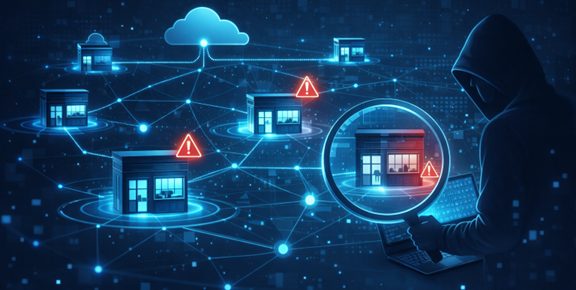
There are several reasons for this shift. Modern cybercriminal organizations rely heavily on automation. They use automated scanning tools that continuously search the internet for vulnerable systems. These tools identify exposed remote access services, weak passwords, outdated software, or improperly configured cloud platforms.
Because these tools operate at scale, attackers can evaluate thousands of potential targets every day. Small businesses often appear attractive because they may have fewer dedicated cybersecurity resources.
At the same time, digital transformation has expanded the technology footprint of many organizations. Cloud applications such as Microsoft 365, collaboration platforms, and remote access tools enable employees to work more efficiently but also introduce new security considerations.
Another factor driving cybersecurity investment is the growing role of cyber insurance. Insurance providers now require organizations to demonstrate specific security controls before issuing policies. Businesses without these protections may face higher premiums or difficulty obtaining coverage.
Regulatory expectations are also increasing. Industries such as healthcare, financial services, legal services, and professional consulting must protect client information and demonstrate appropriate cybersecurity practices.
Finally, supply chain security has become a growing concern. Many companies now require vendors and partners to demonstrate cybersecurity maturity before allowing system access or sharing sensitive information.
For these reasons, cybersecurity is no longer simply an IT issue. It is a leadership issue that directly impacts business resilience, customer trust, and long-term growth.
This guide is designed to help small business leaders understand cybersecurity from a practical perspective. It explains common risks facing modern organizations, outlines the essential protections every business should implement, and provides guidance on evaluating cybersecurity posture.
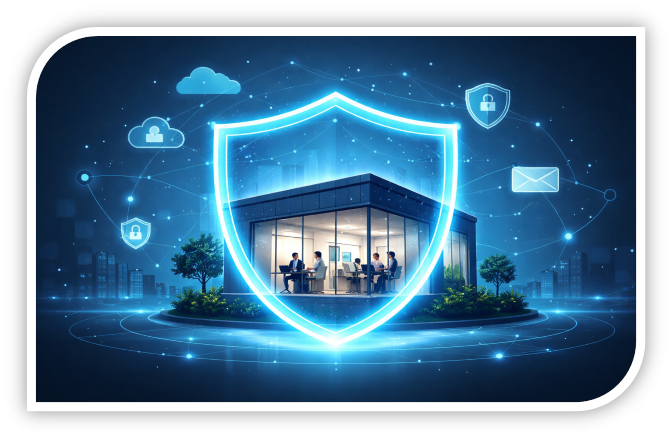
Cybersecurity for Small Businesses: Quick Overview
Small business cybersecurity can appear complex because it involves multiple technologies, policies, and operational processes. However, most organizations can significantly reduce their risk exposure by implementing a core set of foundational protections.
The most common cyber threats affecting small businesses include:
- Phishing attacks designed to steal employee credentials
- Ransomware attacks that encrypt business data
- Business email compromise scams targeting financial transactions
- Unauthorized access to cloud systems
- Malware infections on employee devices
- Insider mistakes that expose sensitive information
Many cyber incidents begin with relatively simple entry points. A stolen password, a malicious email link, or an unpatched software vulnerability can provide attackers with an initial foothold.
The most important cybersecurity controls that businesses should prioritize include:
- Multi-factor authentication (MFA)
- Endpoint detection and response (EDR)
- Email security filtering
- Patch management
- Secure backup systems
- Security awareness training
- Network security protection
- Continuous monitoring and threat detection
When these protections are implemented together, they create layered defenses that make it significantly more difficult for attackers to compromise systems.
Rather than trying to eliminate every possible risk, the goal of cybersecurity is to reduce the likelihood and impact of cyber incidents while ensuring the organization can recover quickly if an incident occurs.
Why Small Businesses Are Prime Targets for Cyberattacks
Many business owners assume that cybercriminals are primarily interested in large enterprises with millions of customer records. While large organizations certainly face cyber threats, small and mid-sized businesses are often targeted even more frequently.
One reason is resource limitations. Large enterprises often maintain dedicated cybersecurity teams responsible for monitoring threats, responding to incidents, and continuously improving security controls. Smaller organizations typically rely on smaller IT teams with broader responsibilities.
Attackers are aware of this difference and may assume that smaller organizations have fewer defensive controls in place.
Another factor is automation. Modern cybercriminal groups operate more like technology companies than individual hackers. They deploy automated scanning tools that search the internet for vulnerable systems.
These tools can identify weaknesses such as:
- Weak authentication systems
- Unpatched software
- Misconfigured cloud services
- Exposed remote access services
Because the scanning process is automated, attackers can quickly identify thousands of potential targets.
Supply chain relationships also increase the value of small business targets. Many SMBs interact with larger organizations through vendor portals, document sharing systems, and financial platforms. Compromising a smaller vendor can sometimes allow attackers to gain access to larger networks.
Credential theft also plays a significant role in modern cyberattacks. Phishing emails often trick employees into entering login credentials on fraudulent websites. Once attackers obtain valid credentials, they can access systems while appearing to be legitimate users.
Finally, ransomware attackers frequently target small businesses because operational disruption creates urgency. Organizations experiencing downtime may feel pressure to restore systems quickly.
Understanding why attackers target small businesses helps organizations focus their cybersecurity investments on the areas that provide the greatest protection.
The Most Common Cybersecurity Risks Facing SMBs
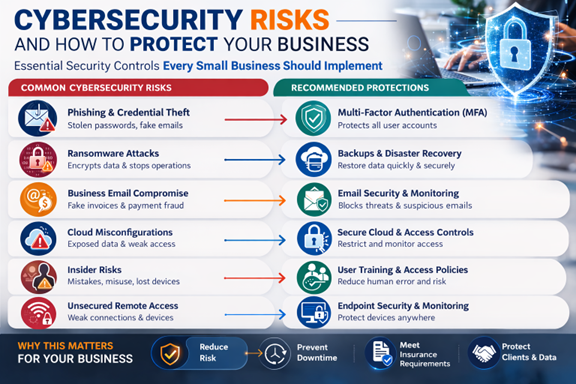
While cybersecurity threats continue evolving, several risks consistently affect small and mid-sized businesses.
Phishing and Credential Theft
Phishing attacks remain the most common entry point for cyber incidents. These attacks use emails that appear to come from trusted organizations or coworkers.
Employees may be asked to click links, download attachments, or enter login credentials. Once credentials are stolen, attackers can access systems directly.
Ransomware Attacks
Ransomware attacks encrypt business systems and demand payment to restore access. Many attackers now use “double extortion” tactics where they also steal sensitive data before encryption.
Organizations that cannot quickly restore systems from backups may face prolonged operational disruption.
Business Email Compromise (BEC)
Business email compromise attacks impersonate executives or vendors to request fraudulent payments.
These scams often target financial departments and rely on social engineering rather than technical vulnerabilities.
Cloud Misconfigurations
As organizations adopt cloud platforms, misconfigured settings can expose sensitive data or allow unauthorized access.
Common issues include excessive permissions, inactive user accounts, or insufficient monitoring of login activity.
Insider Risk
Not all cybersecurity incidents originate from external attackers. Employees may accidentally expose sensitive information through mistakes such as sending data to the wrong recipient or using insecure devices.
Unsecured Remote Access
Remote work environments require secure connectivity. If remote access systems lack strong authentication or monitoring, attackers may attempt to access networks directly.
The Core Cybersecurity Controls Every SMB Should Implement
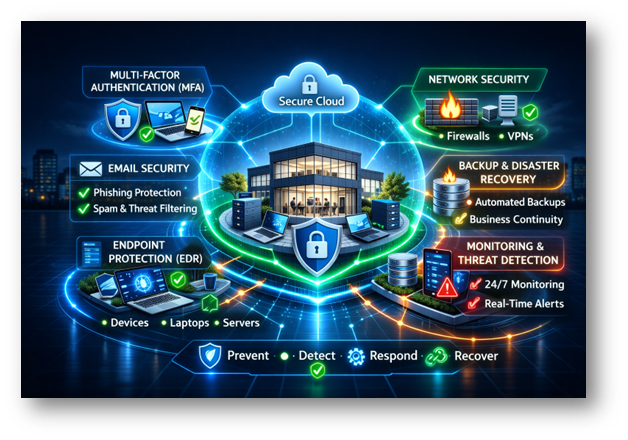
Strong cybersecurity programs rely on multiple layers of protection working together. The following controls form the foundation of effective cybersecurity protection for businesses.
Multi-Factor Authentication (MFA)
Multi-factor authentication requires users to verify their identity using more than just a password.
For example, a user may enter a password and then confirm login using a mobile authentication app.
MFA significantly reduces the risk of unauthorized access.
Endpoint Detection and Response (EDR)
Endpoint detection and response tools monitor devices such as laptops and desktops for suspicious behavior.
These tools can detect malware, unusual system activity, or unauthorized software.
Email Security
Email remains the primary entry point for cyberattacks. Advanced email filtering helps block phishing emails, malicious attachments, and suspicious links.
Patch Management
Software vendors regularly release updates to fix security vulnerabilities. Patch management ensures these updates are applied promptly.
Backup and Disaster Recovery
Secure backups allow organizations to restore systems if data is lost or encrypted during an attack.
Backups should be stored securely and tested regularly.
Security Awareness Training
Employees play a critical role in cybersecurity. Training programs help staff recognize phishing emails and other threats.
Network Security
Firewalls and network monitoring tools help protect internal systems from unauthorized connections.
Monitoring and Threat Detection
Continuous monitoring allows organizations to detect suspicious activity quickly and respond before incidents escalate.
Microsoft 365 Security Risks Many Businesses Overlook
Microsoft 365 has become a core platform for many organizations. It provides email services, document storage, collaboration tools, and communication platforms.
However, many businesses assume that simply using Microsoft 365 automatically provides complete security protection.
Cloud services operate under a shared responsibility model. While Microsoft secures the infrastructure, organizations are responsible for managing user access, permissions, and configuration settings.
Common risks include:
- Weak authentication policies
- Lack of conditional access rules
- Excessive permissions granted to SaaS applications
- Limited monitoring of user login activity
Strengthening Microsoft 365 security often involves implementing stronger identity protection policies and regularly reviewing application permissions.
Cybersecurity and Cyber Insurance Requirements
Cyber insurance has become an important component of risk management for many organizations.
However, insurance providers have significantly increased their cybersecurity requirements in recent years.
Many insurers now require organizations to implement specific controls such as:
- Multi-factor authentication
- Endpoint detection and response
- Secure backups
- Vulnerability management
- Security awareness training
These requirements reflect the growing recognition that cybersecurity directly affects financial risk exposure.
Organizations that cannot demonstrate appropriate security controls may face higher premiums or difficulty obtaining coverage.
The Role of Security Leadership (vCISO)
Cybersecurity strategy requires leadership and coordination across the organization.
Large enterprises often employ Chief Information Security Officers (CISOs) responsible for overseeing security programs. Small businesses may not require a full-time executive in this role.
Instead, many organizations benefit from virtual CISO (vCISO) services.
A vCISO provides strategic cybersecurity leadership including:
- Developing security policies
- Aligning cybersecurity initiatives with business goals
- Evaluating technology risks
- Supporting compliance efforts
- Creating long-term security strategies
This leadership helps ensure cybersecurity investments support overall business objectives.
How Businesses Should Evaluate Their Cybersecurity Posture
Organizations cannot improve cybersecurity without understanding their current security maturity.
Several types of assessments help evaluate cybersecurity posture.
Risk Assessments
Risk assessments identify potential threats, vulnerabilities, and the potential impact of incidents.
Vulnerability Assessments
These scans identify technical weaknesses such as outdated software or exposed services.
Security Audits
Audits evaluate whether organizations follow established security policies and best practices.
Compliance Reviews
Organizations in regulated industries must ensure they meet industry security requirements.
A cybersecurity posture review typically combines these approaches to provide leadership with a clear picture of organizational risk.
How ICG Helps Small Businesses Strengthen Cybersecurity
For many organizations, managing cybersecurity internally can be challenging due to limited resources and rapidly evolving threats.
ICG helps businesses strengthen cybersecurity through:
- Managed IT services
- Cybersecurity protection and monitoring
- Threat detection and response
- Security assessments
- Compliance support
- Strategic cybersecurity guidance
By partnering with experienced cybersecurity professionals, organizations can implement modern security protections while focusing on core business operations.
The Bottom Line on Cybersecurity for Small Businesses
Cybersecurity should be treated as a core component of business risk management.
Organizations that implement layered security protections, train employees, and regularly evaluate their cybersecurity posture are better positioned to prevent incidents and recover quickly when disruptions occur.
Strong cybersecurity practices help businesses maintain operational resilience, protect customer data, and support long-term growth.
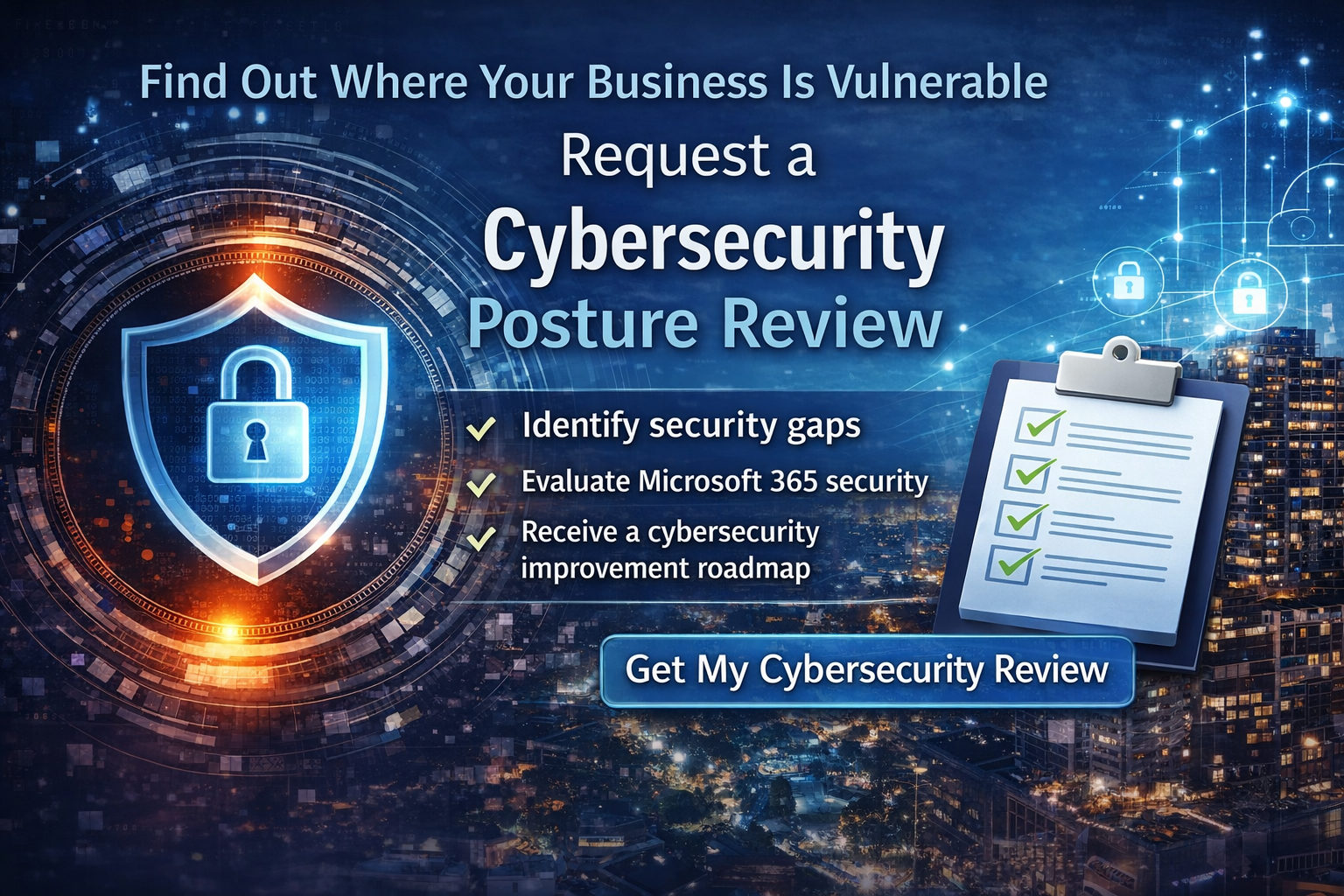
Request a Cybersecurity Posture Review
Understanding your current cybersecurity posture is the first step toward improving protection.
ICG offers Cybersecurity Posture Reviews designed to help businesses identify security gaps, prioritize improvements, and strengthen overall protection.
Organizations that proactively evaluate their cybersecurity maturity are better prepared to prevent disruptions and protect sensitive information.
Related Questions Businesses Ask About Cybersecurity
How much should small businesses spend on cybersecurity?
Many organizations allocate between 5% and 10% of their IT budget toward cybersecurity protections.
Do small businesses really need cybersecurity protection?
Yes. Small businesses are frequently targeted because attackers assume defenses may be weaker.
What is the biggest cybersecurity risk for SMBs?
Phishing and credential theft remain the most common entry points for cyber incidents.
What is a cybersecurity risk assessment?
A cybersecurity risk assessment evaluates threats, vulnerabilities, and potential impact to help organizations prioritize security improvements.
Frequently Asked Questions About SMB Cybersecurity
What is small business cybersecurity?
Small business cybersecurity refers to the strategies and tools used to protect business systems, networks, and data from cyber threats.
Why are small businesses targeted by cybercriminals?
Attackers often target SMBs because they may have fewer security resources and weaker defenses.
What is the most important cybersecurity control?
Multi-factor authentication is one of the most effective protections against unauthorized access.
How often should businesses perform cybersecurity assessments?
Most organizations should conduct formal cybersecurity assessments at least once per year.
What are managed cybersecurity services?
Managed cybersecurity services provide businesses with external expertise and monitoring capabilities to protect systems without requiring an internal security team.


.png)