
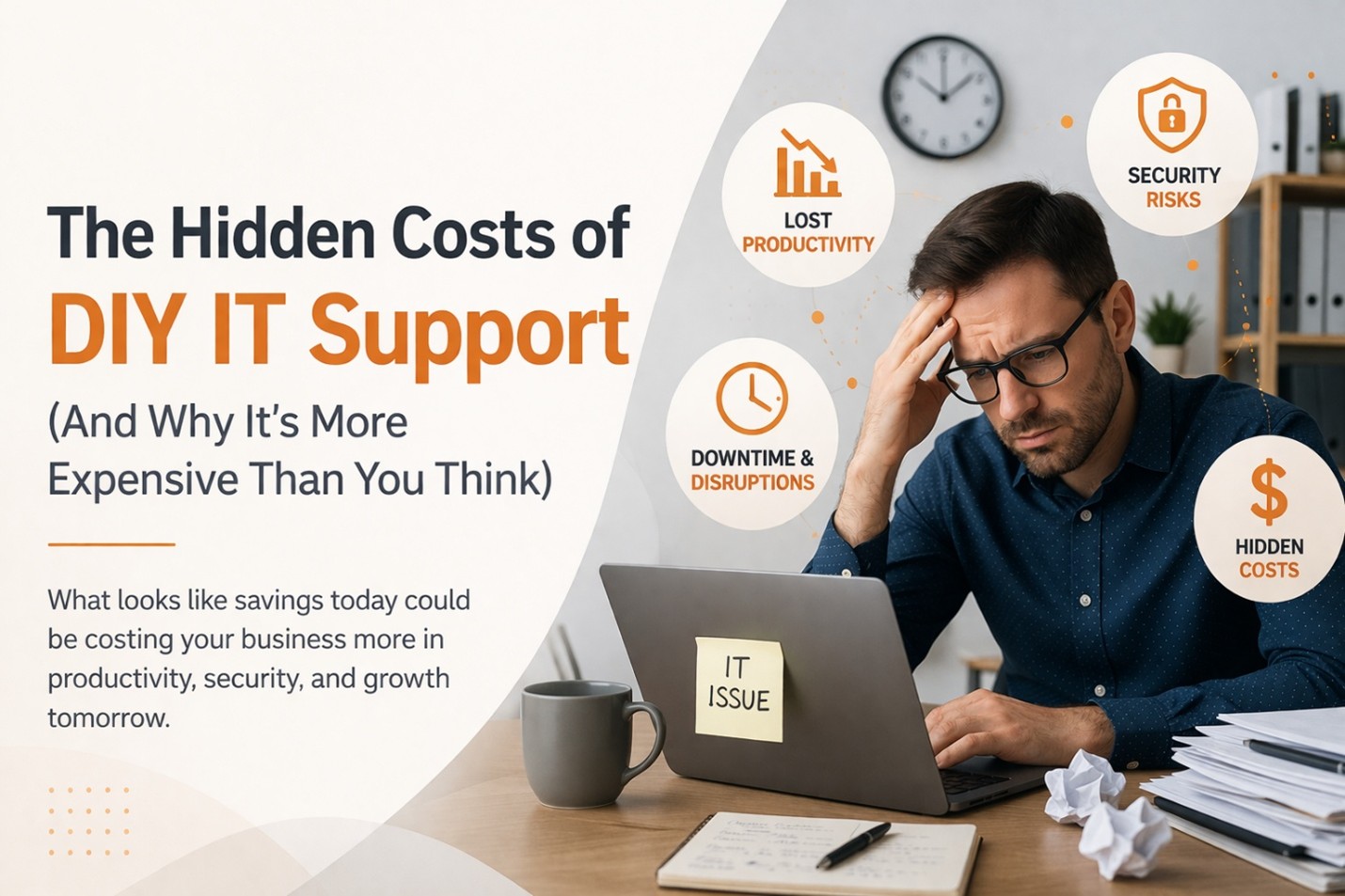


Many small and mid-sized businesses rely on DIY IT support to keep costs down.
At first glance, it seems efficient—use internal resources, fix issues as they arise, and avoid paying for outside services. But over time, what looks like savings often turns into hidden costs that impact productivity, security, and long-term business performance.
👉 DIY IT doesn’t reduce costs—it shifts them into areas you don’t immediately see.
Why DIY IT Support Feels Like the Right Choice
For many businesses, DIY IT starts out of necessity or convenience. A tech-savvy employee or small internal team takes ownership of systems, tools, and troubleshooting, often alongside their primary responsibilities.
This approach can work in the early stages. However, as systems grow more complex and the business becomes more dependent on technology, small inefficiencies begin to compound. Without structure, documentation, and a clear strategy, IT becomes reactive instead of enabling the business.
The Real Hidden Costs of DIY IT Support
1. Lost Productivity
Most IT issues aren’t major—but they are frequent and disruptive. Employees lose time dealing with login issues, slow systems, application errors, and connectivity problems that interrupt their workflow.
While each issue may only take minutes to resolve, the cumulative impact across an organization can be significant. Over time, this lost productivity directly affects output, employee satisfaction, and overall business efficiency.
2. Increased Security Risk
DIY IT environments often lack consistency in how security controls are implemented and maintained. Critical functions like patching, user access management, and monitoring are typically handled reactively rather than proactively.
This creates gaps that attackers can exploit. Without proper visibility and response capabilities, threats may go undetected until damage has already been done—resulting in financial loss, downtime, and reputational impact.
🔗 Related Resource
To understand how these risks are identified and prioritized, review:
👉 Cybersecurity for Small Businesses: The Complete Guide
https://www.icgi.com/blog/cybersecurity-for-small-businesses-the-complete-guide
3. Downtime and Business Disruption
DIY IT typically focuses on fixing problems after they occur instead of preventing them. This reactive approach increases the likelihood of unexpected outages and prolonged resolution times.
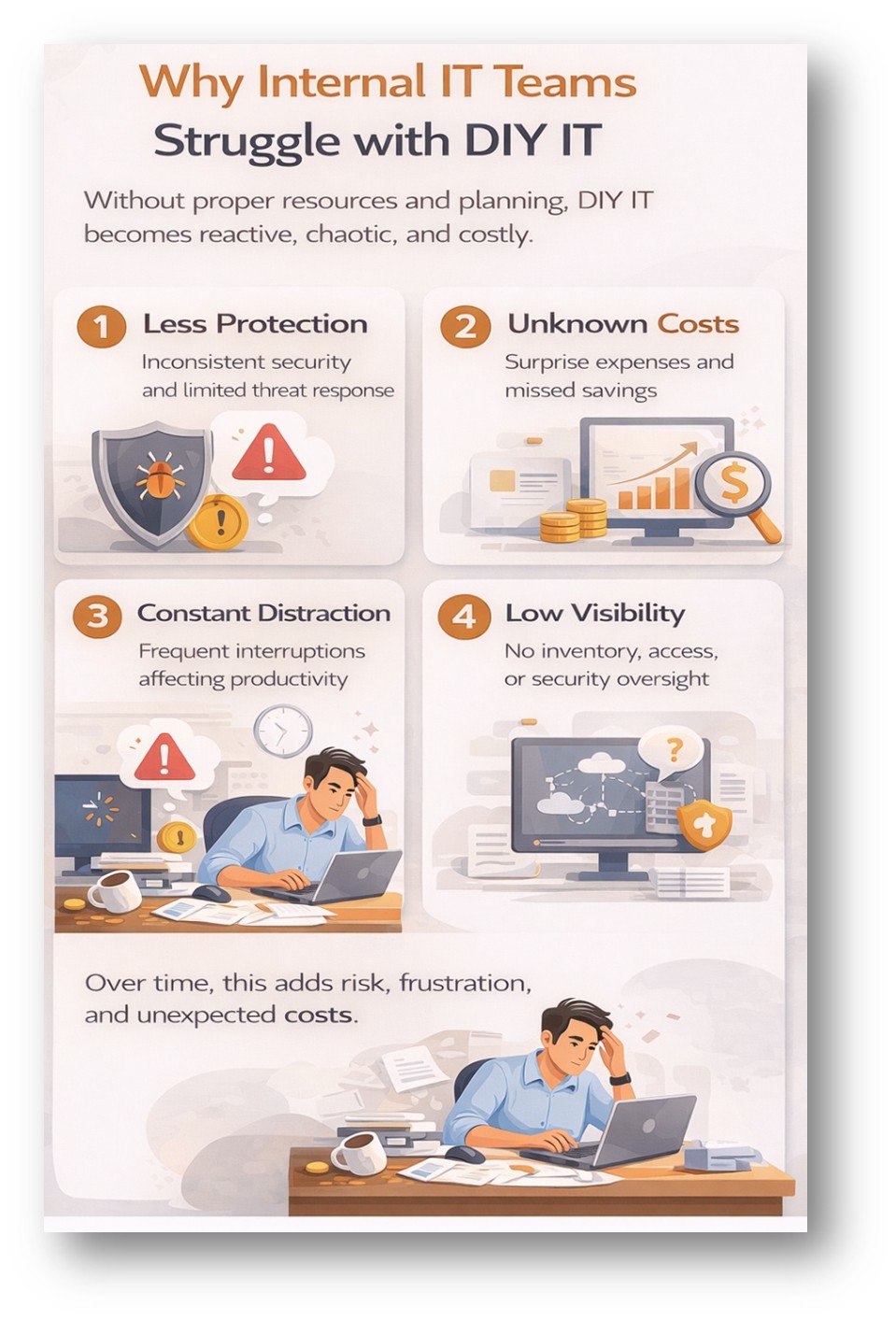
Even short periods of downtime can disrupt operations, delay customer interactions, and impact revenue. Without proactive monitoring and maintenance, these disruptions tend to occur more frequently and with greater impact.
4. Lack of Strategic Direction
Without a defined IT strategy, decisions are often made based onimmediate needs rather than long-term outcomes. This leads to inconsistent systems, fragmented processes, and limited scalability.
Over time, businesses accumulate technical debt—systems and decisions that create inefficiencies and limit future growth. A lack of strategy makes it difficult to align technology with business goals.
5. Vendor and Tool Sprawl
DIY IT environments tend to grow organically, with new tools added as needs arise. Without centralized oversight, this often results in overlapping solutions and disconnected systems.
This increases complexity, reduces visibility, and leads to unnecessary spending. It also makes troubleshooting more difficult and increases the risk of misconfigurations.
6. Compliance and Insurance Challenges
Cyber insurance and compliance requirements have become more stringent. Businesses are now expected to demonstrate specific security controls and provide documentation during audits or policy renewals.
DIY IT environments often struggle to meet these expectations. This can result in higher premiums, coverage limitations, or even denied claims if proper controls are not in place.
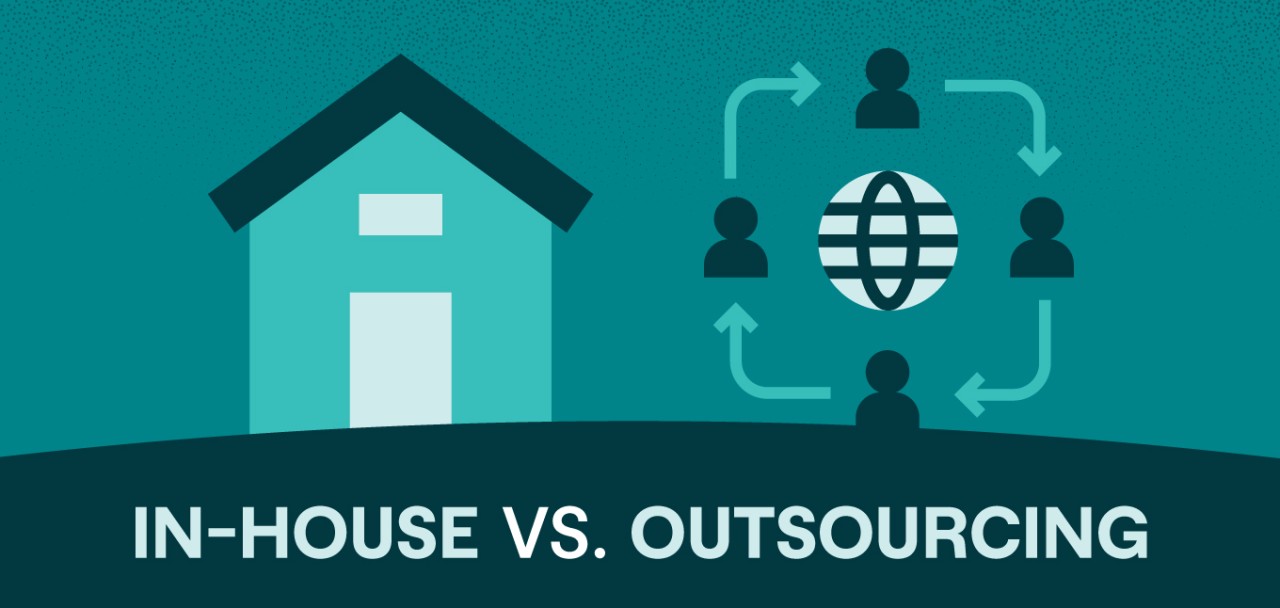
The Cost Comparison: DIY IT vs Managed IT
Many businesses focus only on direct IT costs—but the real comparison includes operational impact across the organization.
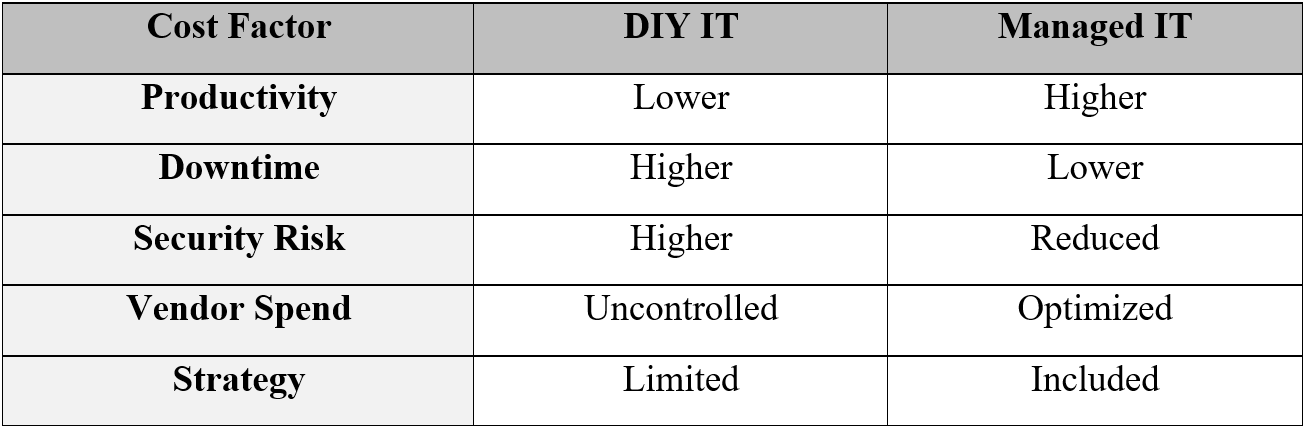
👉 When hidden costs are factored in, managed IT is often the more efficient and predictable option.
What Business Owners Actually Need
Business owners aren’t looking for more tools—they’re looking for outcomes. They want reliable systems, predictable costs, strong cybersecurity, and the confidence that issues will be resolved quickly.
DIY IT may address individual problems as they arise, but it rarely delivers consistency across all areas. As businesses grow, this gap becomes more noticeable.
How ICG Helps Reduce IT Costs and Risk
ICG helps businesses move beyond reactive IT by introducing structure, consistency, and proactive management. We focus on improving system reliability, strengthening security, and aligning technology with business objectives.
By standardizing environments and reducing complexity, we help businesses control costs while improving performance. The result is a more predictable and scalable IT environment.
From Reactive IT to Strategic IT
Many businesses don’t realize they’ve outgrown DIY IT until issues begin to stack up. What once worked becomes increasingly difficult to manage as demands increase.
The shift isn’t just about outsourcing IT—it’s about moving from reactive fixes to proactive management, and ultimately to a strategic approach that supports long-term growth.
Ready to Eliminate Hidden IT Costs?
If your business is experiencing recurring issues, security concerns, or unpredictable IT costs, it may be time to evaluate your current approach.
Start with our:
👉 Cybersecurity for Small Businesses: The Complete Guide
Then take the next step:
👉 Schedule Your Cybersecurity Posture Review
No obligation. We’ll help you identify risks, inefficiencies, and opportunities to improve.
FAQ: Hidden Costs of DIY IT Support
What is DIY IT support?
DIY IT support is when a business manages its own IT systems internally rather than using a managed service provider.
Why do businesses use DIY IT?
To reduce upfront costs or because they believe their environment is simple enough to manage internally.
What are the biggest hidden costs of DIY IT?
Lost productivity, increased security risk, downtime, lack of strategy, and inefficient vendor spending.
Is managed IT more cost-effective than DIY IT?
When considering total business impact, managed IT is often more cost-effective due to reduced downtime and improved efficiency.
When should a business move away from DIY IT?
When IT issues, security risks, or operational complexity begin affecting business performance.


.png)